
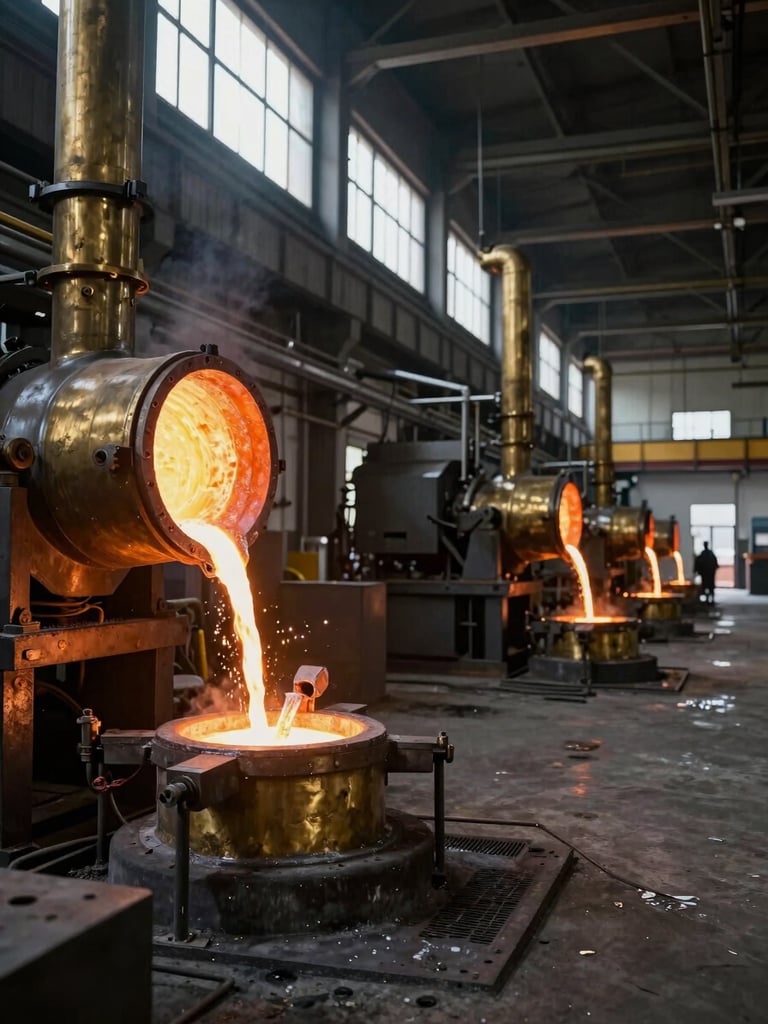
Wide environmental shot of a brass foundry floor under high north-facing factory windows, molten brass being poured into a casting mold in the left foreground, orange-gold liquid catching tungsten light, steel infrastructure receding into depth on the right, no people visible in focus
— Who We Are

Built on the metallurgy of reclaimed brass.

Uma Metals was founded on a single provable claim: closed-loop sourcing produces tighter alloy composition than most virgin-stock inputs. We run that claim through every batch.

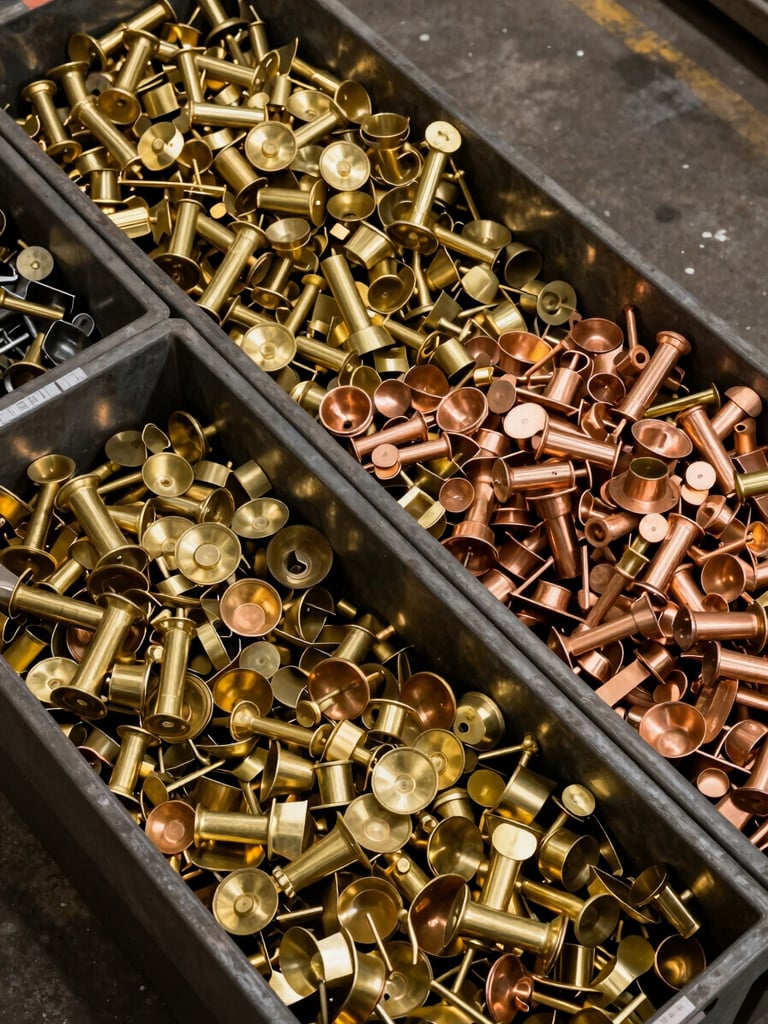
Overhead 45-degree angle shot of sorted scrap brass pieces in industrial bins on a concrete floor, warm brass and copper tones catching overhead factory lighting, grade labels partially visible at bin edges, no people in frame, high material detail and texture
/ The Founding Case

Scrap-to-spec was never a fallback.

Uma Metals began with a straightforward observation: scrap brass sorted by grade and verified at intake carries fewer contaminants than commodity virgin stock. Composition control starts at reclamation, not at the furnace.

That upstream discipline—grading, testing, documented chain of custody—is what drives our scrap-to-spec turnaround and removes virgin-material dependency from your supply chain calculus.

Manufacturing Philosophy

Three principles that run every heat.

▸ Material First
▸ Closed-Loop Sourcing
▸ Compounding Efficiency

Spec drives every decision.

No virgin-material dependency.

Each run informs the next.

Alloy grade, composition tolerance, and verified certificate of analysis are locked before production begins. Performance is the specification; everything else follows.

Every batch draws from graded, tested reclaim stock. The circular-economy metallurgy isn't a claim we layer on top—it's the feedstock model the whole operation is built around.

Heat logs, composition data, and yield records accumulate into a production dataset that tightens tolerances and reduces energy draw with every cycle we complete.

Material integrity verified at every stage.

If your procurement checklist includes both dimensional tolerances and documented material provenance, we are the single vendor relationship that closes both columns.